Tractor Supply's Role in Burlington, NC's Sustainable Agriculture: An Investigative Report
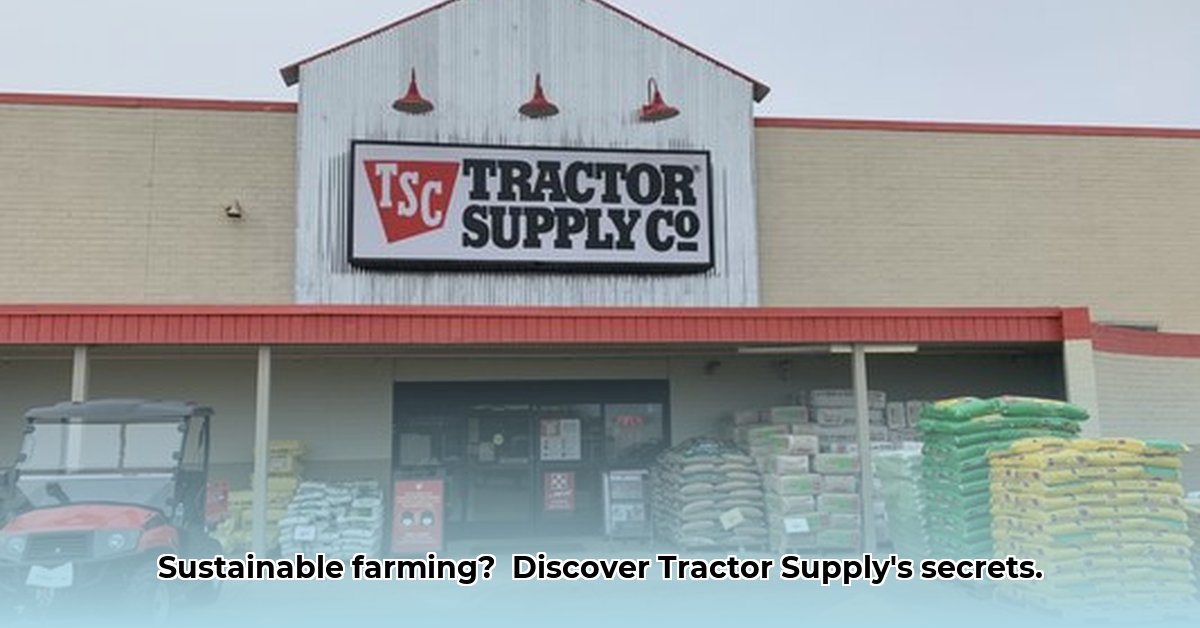
Tractor Supply Company (TSC) holds a prominent position in Burlington, North Carolina's agricultural landscape, serving as a readily accessible supplier for farmers of all sizes. However, the extent of its contribution to sustainable farming practices in the region remains largely unquantified. This investigative report aims to explore TSC's impact, highlighting both its potential and the critical need for further research to definitively assess its role. For a similar analysis in another NC location, see our report on Lenoir's TSC.
Unpacking the Potential: Accessibility and the Sustainable Farming Equation
TSC's Burlington location offers convenient access to agricultural supplies for farmers in Alamance County and surrounding areas like Gibsonville and Graham. This readily available resource could significantly impact the adoption of sustainable practices by reducing travel time and costs, making eco-friendly options more practical. But crucial data is needed to substantiate this hypothesis. What percentage of TSC's Burlington sales are sustainable products? How many farmers utilize their resources for sustainable applications? Without comprehensive sales data and targeted surveys, the assertion that TSC significantly boosts sustainable farming remains speculative.
Inventory Analysis: A Closer Look at Sustainable Product Offerings
A thorough investigation must examine TSC’s Burlington store's product selection. Does the store prominently feature and actively promote environmentally friendly options? What is the breadth and depth of their offerings of organic fertilizers, water-efficient irrigation systems, and biological pest controls? Simple observation isn't enough; a detailed inventory analysis, compared to competitor stores within the region, would reveal the extent to which TSC prioritizes sustainable products. Further, how does TSC's marketing and employee training contribute to promoting sustainable choices?
The Human Factor: Farmer Perspectives and Community Engagement
Quantitative data is vital, but the human perspective is equally important. What are the experiences of local farmers using TSC for sustainable agriculture? To gauge their satisfaction and identify areas for improvement, comprehensive surveys are needed. These should encompass factors such as product availability, pricing, and the helpfulness of TSC staff in guiding farmers towards sustainable choices. Interviews with farmers will provide valuable qualitative insights supplementing quantitative data.
Collaboration: A Roadmap to a Greener Future
Achieving lasting improvements in sustainable agriculture requires collaborative efforts. A multi-faceted approach involving various stakeholders is crucial.
1. Data-Driven Assessment: TSC should conduct a thorough analysis of their sales data focusing on sustainable product lines. This will provide quantifiable metrics on the demand and market share of such products.
2. Farmer Feedback Mechanism: Regular farmer surveys and focus groups will provide invaluable feedback on product satisfaction, unmet needs, and suggestions for improvement.
3. Public-Private Partnerships: Alamance County government could partner with TSC and local agricultural research institutions to conduct studies gauging the impact of TSC's offerings on the broader sustainability of local farms.
4. Transparent Reporting: TSC should publicly share the results of their data analysis and any collaborative research undertaken to promote transparency and accountability.
The Ongoing Investigation: A Call for Further Research
While this report highlights the potential for TSC to contribute positively to sustainable agriculture in Burlington, NC, it also underscores the limitations of available data. A thorough assessment requires further research, including:
- Comprehensive Sales Data Analysis: Detailed analysis of sales figures for specific sustainable products over time. This should include comparisons with sales of non-sustainable alternatives.
- Farmer Surveys: Large-scale surveys to capture the views and experiences of local farmers, focusing on their access to and utilization of sustainable products from TSC.
- Interviews with Key Stakeholders: Interviews with TSC management, employees, local farmers, and Alamance County officials to gain multiple perspectives.
- Comparative Store Analysis: A study comparing TSC's offerings and strategies with those of competing agricultural supply stores in the region.
Through rigorous investigation and collaboration, a clearer understanding of TSC's contributions to the sustainability of Alamance County's agricultural future will emerge. Only then can we assess accurately how TSC contributes—or could contribute—to a greener farming sector.